
Without mentioning the boundary dispute, the spokesperson said that China-India relations have been stable on the whole and "our two sides have maintained dialogue and communication at various levels".
This meeting is taking place after a gap of around four months.
Chinese foreign ministry spokesperson Mao Ning told the media in Beijing on Monday that the two sides held an in-depth exchange of views on expediting the resolution of relevant issues.

He said both sides reaffirmed to sincerely work towards complete disengagement of the troops along the LAC.
China and India have agreed to work to maintain peace along the Line of Actual Control and resolve the border standoff through talks while implementing the consensus reached between the two countries' leadership that 'differences' do not escalate into 'disputes', a top Chinese official said.
Her comments come a day after External Affairs Minister S Jaishankar said in Geneva that roughly 75 percent of the "disengagement problems" with China are sorted out but the bigger issue has been the increasing militarisation of the frontier.

China on Thursday said the meeting between Prime Minister Narendra Modi and Chinese President Xi Jinping in Russia's Kazan on Wednesday carries a "great significance" as they reached an "important common understandings" to improve the bilateral ties.

Jaishankar also spoke about how he expected a change in Russia's direction towards the rest of the world and it may likely want multiple options in Asia.
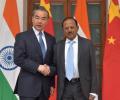
The two sides have already held 21 rounds of talks under the framework of SR dialogue which was set up to find an early solution to the border dispute.
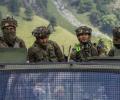
Two days after the India-China military talks, the joint statement, issued in New Delhi by the Indian Army said both sides had a 'candid and in-depth exchange' relating to disengagement along the Line of Actual Control (LAC) in the Western Sector of India-China border areas.

Disengagement from the LAC will remain a chimera because China has given enough indications that the PLA will not move back any more. China has even deployed drones to monitor and deny any patrolling by Indian troops even in the buffer zones which are all in Indian Territory, explains Lieutenant General Prakash Katoch (retd).

India and China are likely to hold another round of diplomatic talks this week on eastern Ladakh with a focus on moving forward in disengagement of troops in the remaining friction points, people familiar with the development said on Tuesday.

He said that "the state of the border will determine the state of the relationship, that's natural".

India and China will complete the disengagement process in the Gogra-Hotsprings area in eastern Ladakh by September 12, the External Affairs Ministry said on Friday.
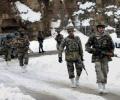
The talks would be held in Moldo opposite the Chushul sector in India.

The two sides held diplomatic talks through video conference on the border standoff in midst of fresh details emerging that China has strengthened its position in several areas in eastern Ladakh including Galwan Valley where a violent clash on June 15 left 20 Indian soldiers dead.

While Prakriti's father has retired from the Indian Air Force, Deeksha's father Kamlesh Kumar is an Inspector in the ITBP.

Qin, who is visiting New Delhi to attend the G20 Foreign Ministers meeting on Thursday, is expected to meet Jaishankar on its sidelines though the foreign ministry here is tight-lipped about it.

The Indian Army guards the Line of Actual Control -- India's border with China -- along with the ITBP.
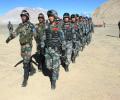
The two countries reviewed the situation in the region during a fresh round of online diplomatic talks under the framework of the Working Mechanism for Consultation and Coordination (WMCC) on border affairs.

The last meeting between the two sides at the Corps Commander level was held in December last year.
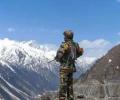
India and China have already disengaged from the banks of Pangong lake after extensive talks and the Gogra Heights and Hot Springs areas are left to be resolved as these friction points were created post-Chinese aggression last year.

The talks are being held with an aim of resolving the ongoing standoff in eastern Ladakh and reaching an agreement on the last remaining friction point in the Hot Springs area which had emerged post April-May 2020 aggression shown by Chinese troops along the Line of Actual Control (LAC) in Ladakh.
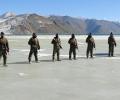
A day after the nearly 12-and-half-hour talks, the two sides, in a joint statement on Monday, reaffirmed that the resolution of the pending issues would help in the restoration of peace and tranquility along the Line of Actual Control (LAC) in the region and enable progress in bilateral relations.
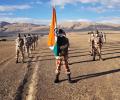
India and China on Friday agreed to hold the next round of military talks at an early date to achieve the objective of complete disengagement in remaining friction points in eastern Ladakh amid fresh sparring between the two sides on the prolonged Line of Actual Control (LAC) standoff.
The talks came a day after the two armies began a limited disengagement in a few areas in Galwan Valley and Hot Spring in a demonstration of their intent to end the row peacefully.

The Army said Gen Pande witnessed Parvat Prahar exercise besides interacting with officers and troops deployed in the region. The exercise featured a display of operational capabilities by artillery guns and other key weapon systems.
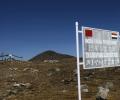
Two Arunachal Pradesh youths from the state's Anjaw district have not returned home from August this year when they had set out in search of medicinal plants near the state's border with China.

The talks will focus on 'delimitation of the border, boundary management and a host of bilateral and international issues'.

External Affairs Ministry Spokesperson Anurag Srivastava said the diplomatic and military talks have helped both sides to enhance understanding of each other's positions on the issue.

The Chinese have only created limited defences for protection of their posts which are located well in depth and much away from the Line of Actual Control, notes Colonel S Dinny (retd).

Sources said the Indian delegation was warmly greeted by senior officials of the Chinese Army before the talks began.

Jaishankar also said that there is a need to take the disengagement process forward.
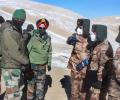
Indian Army Chief General M M Naravane had said on Wednesday that India was hopeful of resolving issues related to disengagement at Patrolling Point 15 (Hot Springs) in eastern Ladakh in the 14th round of talks.
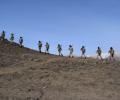
Asked about the reports of the troops on both sides disengaging and moving back to their previous positions, Chinese foreign ministry spokesperson Hua Chunying told a media briefing in Beijing that both sides are taking steps to ease the situation along the borders.
"India and China to hold Corps Commander-level talks on October 12 in the Eastern Ladakh sector to address the ongoing military standoff between the two countries. So far, the two sides have held six rounds of Corps Commander-level talks," the source said.

Kicking off his four-day visit, General Suhag met General Li Zuocheng, the head of China's ground forces which have undergone major restructuring in the last three years.
Twenty personnel of the India-China LAC guarding Indo-Tibetan Border Police (ITBP) force, who displayed bravery during the violent clashes and ongoing military standoff between the two countries in the eastern Ladakh region in May-June 2020, were on Sunday decorated with police gallantry medals.

Nepal said it was confident that both its "friendly neighbours" India and China will resolve their border stand-off at the Line of Actual Control through peaceful means.
India's engagement with China is "complex" and Chinese attempts to unilaterally alter the status quo along the Line of Actual Control (LAC) in eastern Ladakh starting from April-May 2020 seriously disturbed the peace and tranquillity in border areas, the ministry of external affairs (MEA) said in a report on Monday.
 © 2026 Rediff.com - Advertise with us - Disclaimer - Privacy Policy - Sitemap - Feedback - About us - Terms of use - Grievances